Digging Into the Past From Your Living Room: How AI and VR Are Unlocking Ancient Worlds
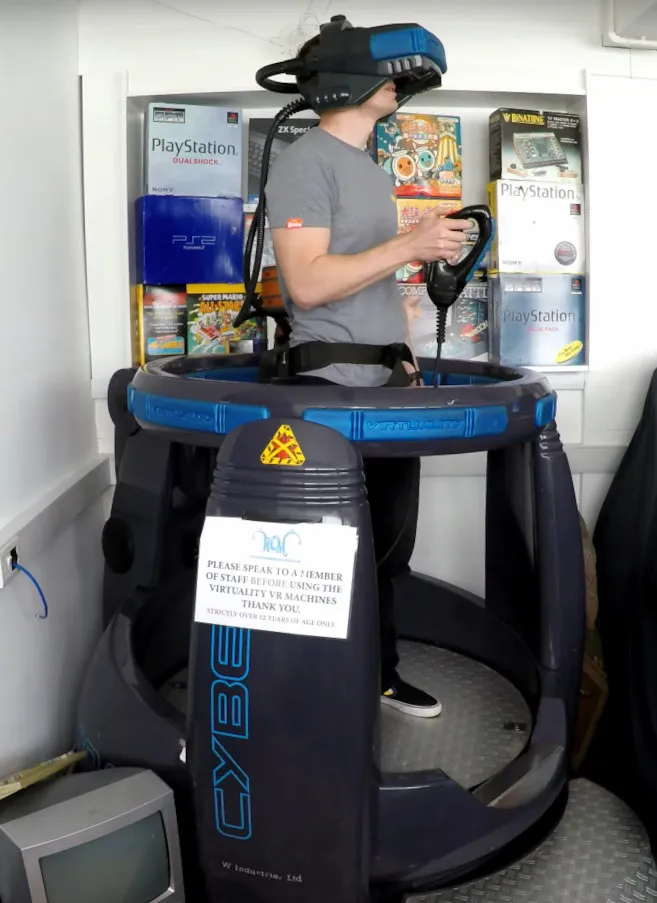
Photo: ctrl-alt-rees YouTube Channel (used with permission), CC BY-SA 4.0, via Wikimedia Commons
Let's be honest — most of us will never spend three weeks on a dig site in the Yucatán or hire a private guide to walk us through the Valley of the Kings. Whether it's the cost, the logistics, or just life getting in the way, the world's most breathtaking archaeological wonders have traditionally belonged to the privileged few. But something genuinely exciting is happening in the intersection of travel and technology, and it's quietly rewriting the rules of who gets to explore.
AI-powered virtual reality is no longer a gimmick. It's becoming a legitimate gateway to places that were once completely out of reach — and for armchair travelers, the timing couldn't be better.
What's Actually Powering These Experiences?
Before we get into the good stuff, it helps to understand what's going on under the hood. The phrase "VR archaeology tour" can mean a lot of different things. At the basic end, you've got 360-degree photo spheres stitched together into a walkthrough — impressive, but fairly passive. At the cutting edge, you're looking at something far more sophisticated.
Modern immersive archaeological experiences are increasingly built on a combination of photogrammetry (the process of building 3D models from thousands of overlapping photographs), LiDAR scanning (which uses laser pulses to map surfaces with extraordinary precision), and AI-driven rendering engines that can fill in missing pieces of structures that have crumbled over centuries.
The result? You can virtually step inside Tutankhamun's tomb and see hieroglyphs rendered in colors that were only recently recovered through multispectral imaging. You can walk the streets of Pompeii as they looked before Vesuvius buried them. You can hover over the Nazca Lines in Peru and finally understand the scale of those enormous geoglyphs in a way that no photograph ever captured.
AI plays a particularly fascinating role in all of this. Machine learning algorithms are now being trained on archaeological data to reconstruct damaged or incomplete structures — essentially making educated, evidence-based guesses about what a temple or amphitheater originally looked like. It's part science, part digital artistry, and entirely mesmerizing.
Democratizing Discovery
Here's where things get genuinely meaningful. Researchers and educators have been talking for years about how access to cultural heritage sites is wildly unequal. A family in rural Kansas and a family in suburban London technically have the same right to visit the Acropolis — but practically speaking, the barriers are enormous.
Virtual archaeology experiences are starting to chip away at that gap. Organizations like CyArk, a nonprofit dedicated to digitally preserving endangered heritage sites, have been creating free and low-cost digital archives of places ranging from Chichen Itza to Angkor Wat. The Smithsonian Institution's open-access 3D digitization program has made hundreds of artifacts and site models available to anyone with a browser.
For schools in particular, this is a revolution. A history teacher in Albuquerque can now take her students on a guided walk through ancient Rome without a field trip budget. A college professor in rural Montana can show his students the interior of the Great Pyramid of Giza with a level of detail that would've been impossible even five years ago.
And for those of us who just love to explore? It's like having a backstage pass to civilization itself.
The Best VR Archaeology Experiences Available Right Now
So where do you actually start? Here's a curated rundown of some of the most compelling virtual archaeological experiences you can access today, many of them free.
Google Arts & Culture — Ancient Wonders Collection This is probably the easiest entry point. Google's platform hosts immersive street-view style tours of sites including the Pyramids of Giza, Pompeii, and Stonehenge. No headset required — though if you have one, the experience levels up considerably.
The British Museum — Virtual Tours and 3D Collections The British Museum has invested heavily in digital access, offering online tours of key galleries alongside 3D-rendered artifacts you can rotate and examine up close. Their Egyptian collection alone is worth an afternoon.
Machu Picchu 360 — Peru's Gift to the Internet The Peruvian government partnered with tech developers to create an extraordinary 360-degree tour of Machu Picchu that lets you explore the citadel at your own pace. The aerial views alone are jaw-dropping.
ARTE's "Assassin's Creed Discovery Tours" Influence While not strictly a museum product, Ubisoft's Discovery Tour mode — built from their meticulous historical research for the Assassin's Creed franchise — has become a surprisingly legitimate educational tool for ancient Egypt and ancient Greece. It's gaming meeting archaeology in the best possible way.
The Egyptian Museum's Digital Initiative Egypt has been increasingly aggressive about digitizing its cultural treasures. The Grand Egyptian Museum, which has been rolling out in phases near Giza, offers virtual previews of its collection that are genuinely stunning.
What the Experts Are Saying
Archaeologists have had a complicated relationship with virtual tourism. Some worry about oversimplification — the concern that a polished VR experience might give people a false sense of certainty about things that are still hotly debated among scholars. Others point out that digital reconstruction inevitably involves interpretive choices that aren't always made transparent to the viewer.
But the overwhelming trend in the academic community is cautious optimism. Many researchers see virtual access as a way to reduce physical wear and tear on fragile sites. The caves of Lascaux in France, for instance, were closed to the public decades ago because human breath and body heat were literally damaging the prehistoric paintings. A digital replica — Lascaux IV — now handles the visitor experience instead.
That's not a compromise. That's a solution.
The Journey Is Just Beginning
We're still in relatively early days. Headset adoption is growing but hasn't hit mainstream saturation yet, and the quality of experiences varies enormously depending on your hardware. But the trajectory is clear. As AI gets smarter, as scanning technology gets cheaper, and as internet infrastructure improves, the virtual archaeology space is going to explode.
For travelers who've always dreamed of touching history — or at least standing in its shadow — the couch is becoming a surprisingly good launching pad. At A Virtual Journey, we think that's worth celebrating. The world's past belongs to all of us, and for the first time in human history, we actually have the tools to act like it.
Lace up your virtual boots. There's a lot of ground to cover.