Behind the Velvet Rope: Virtual Access to the World's Most Off-Limits Places
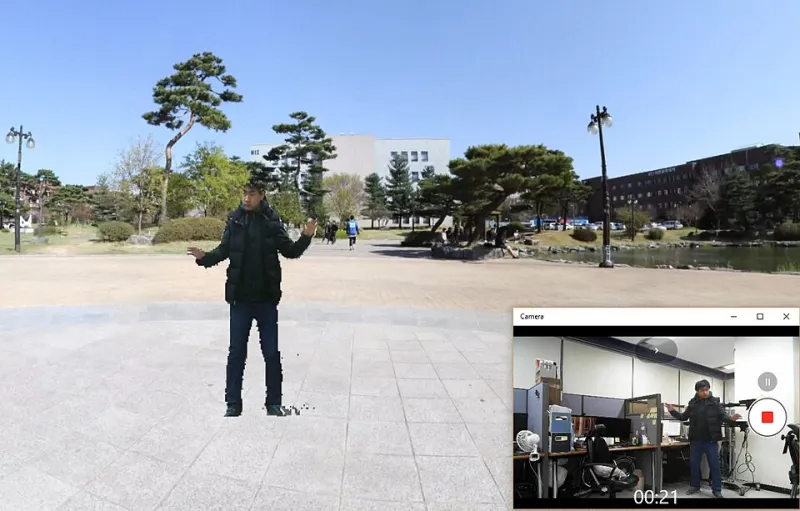
Photo: CHHEANG VUTHEA, CC BY-SA 4.0, via Wikimedia Commons
There's a certain kind of place that shows up on travel bucket lists not because anyone expects to actually visit it, but because the idea of it is just too compelling to ignore. The sealed chambers beneath Egypt's great pyramids. The private apartments inside Buckingham Palace. The island of North Sentinel, where an isolated tribe has rejected all contact with the outside world for thousands of years. Places like these exist at the edge of human curiosity — fascinating precisely because they're unreachable.
But "unreachable" is starting to mean something different. Virtual reality, 360° imaging technology, and high-resolution digital reconstruction are quietly punching holes through some of the world's most formidable barriers. Not all of them — and not without limits — but enough to change what it means to say you've seen a place.
The Archaeology That's Too Fragile to Visit
Some of the most significant archaeological sites on the planet are off-limits not because of politics, but because of us. Human breath, body heat, and foot traffic are genuinely destructive to ancient environments. The Lascaux Caves in southern France — home to some of the most spectacular Paleolithic paintings ever discovered — were closed to the public in 1963 after just fifteen years of tourism caused irreversible damage. The real caves are sealed. But Lascaux IV, an extraordinarily detailed digital and physical recreation, gives visitors an experience that's arguably closer to what those paintings looked like when they were made than anything a rushed tourist group could absorb in person.
Similarly, the Valley of the Kings in Egypt restricts access to specific tombs on a rotating basis to manage preservation. Virtual reconstructions — some built using photogrammetry and LiDAR scanning — allow you to move through the painted corridors of Tutankhamun's burial chamber or Seti I's tomb with a level of detail that no physical visit could match. You can pause. You can zoom. You can read the hieroglyphs at your own pace without a tour group breathing down your neck.
For American history buffs and armchair archaeologists, these aren't second-best options. In many cases, they're better.
Palaces, Power, and Private Rooms
Royal residences occupy a strange place in the public imagination. We see the exteriors constantly — on the news, in films, across social media. But the actual interiors, particularly the private living quarters, remain almost entirely hidden from public view.
Virtual tours have started to change that, at least for some of the world's most storied palaces. The Palace of Versailles offers an increasingly sophisticated digital experience that goes well beyond the rooms available to the millions of tourists who visit in person each year. State apartments, private cabinet rooms, and garden perspectives that are physically inaccessible to regular visitors can be explored in detail through the palace's official virtual platform.
In the UK, while Buckingham Palace's private rooms remain firmly off-limits, Windsor Castle and Hampton Court have both invested in immersive digital experiences that take visitors through spaces no ticket can unlock. For Americans with a weakness for European royal history — and there are more of us than we probably admit — this is genuinely exciting access.
The Forbidden City in Beijing has gone even further, building one of the most comprehensive virtual museum experiences in the world. Entire sections of the complex that are closed to physical visitors, along with thousands of artifacts from the imperial collection, are available through their digital platform. The scale of what's been digitized is staggering.
Geopolitical Barriers and the Places We Can't Go
Some destinations are off-limits for reasons that have nothing to do with preservation and everything to do with politics. North Korea is the obvious example — a country that's essentially inaccessible to American citizens and opaque to the outside world almost by design.
And yet, thanks to a small number of journalists, defectors, and documentary filmmakers who've captured footage there, combined with satellite imagery and the accounts of people who've left, virtual and documentary-style experiences have emerged that offer real insight into daily life inside the country. These aren't polished tourism products — they're something rawer and more important. They're windows into a place that actively resists being seen.
Similarly, the Chernobyl Exclusion Zone in Ukraine — technically visitable in limited, guided contexts before the current conflict made it inaccessible again — has been extensively documented through 360° photography and VR experiences. You can walk the empty streets of Pripyat, peer into the abandoned amusement park, and stand at the edge of the reactor site without absorbing a millisievert of radiation.
For Americans who find themselves curious about the world's harder edges — the places shaped by catastrophe, ideology, or extreme isolation — these virtual experiences offer something that no conventional travel guide can.
The Ocean Floor and the Ends of the Earth
Not every restricted place is restricted by humans. Some are simply hostile to human survival.
The deep ocean remains one of the least explored environments on Earth. Less than 20% of the seafloor has been mapped in meaningful detail. But remotely operated vehicles and underwater drones have captured extraordinary footage of hydrothermal vents, deep-sea ecosystems, and even famous shipwrecks like the Titanic and the Bismarck. Platforms like NOAA's Ocean Exploration program and several VR experiences built from submersible footage let you descend into environments where the pressure would crush an unprotected human body in seconds.
Antarctica presents a different kind of inaccessibility — not impossible to visit, but prohibitively expensive and logistically complex for most people. Virtual tours built from expedition footage and satellite imagery bring its otherworldly landscapes — the vast white silence, the penguin colonies, the glacial walls — to anyone with a screen and a little curiosity.
Why Access Matters
There's a larger point underneath all of this. For most of human history, the extraordinary places of the world were accessible only to the wealthy, the powerful, or the extraordinarily lucky. The rest of us got to read about them, maybe see a photograph.
Virtual tourism doesn't fix every inequality in how people experience the world. But it does something meaningful: it democratizes wonder. It says that a kid in rural Ohio or a retiree in Tucson with limited mobility deserves to stand in the painted corridors of an Egyptian tomb or look out from a sealed Versailles chamber just as much as anyone else.
That's not a small thing. At A Virtual Journey, it's actually kind of the whole point.