Scrolling Away the Silence: How Virtual Travel Is Quietly Becoming a Mental Health Lifeline for Millions of Americans
Photo: Shixart1985, CC BY 2.0, via Wikimedia Commons
There's a woman in rural Montana — let's call her Carol — who hasn't left her property in three years. Severe rheumatoid arthritis made long drives painful, and the nearest town is forty minutes away on a good day. She'd been managing okay, she says, until the quiet started to feel less like peace and more like a wall closing in.
Then her granddaughter set her up with a virtual tour platform. Within a week, Carol had "walked" the canals of Venice, stood at the edge of the Grand Canyon's South Rim, and joined a live-guided exploration of Kyoto during cherry blossom season. More importantly, she'd started talking to people — real people, scattered across the country — who were doing exactly the same thing.
"I didn't realize how much I missed having something to look forward to," she told us. "Now I wake up on Tuesdays because that's when our group does a new destination."
Carol's story isn't unique. It's actually part of a pattern that mental health professionals are increasingly paying attention to.
The Numbers Behind the Quiet Crisis
America has a loneliness problem, and it predates the pandemic. A 2023 advisory from the U.S. Surgeon General identified loneliness and social isolation as a public health epidemic, noting that roughly half of American adults report measurable levels of loneliness. For older Americans — particularly those in rural areas, those with disabilities, or those who've lost spouses and close friends — that number climbs even higher.
The consequences aren't just emotional. Chronic loneliness has been linked to increased risk of heart disease, cognitive decline, and premature death. The stakes, in other words, are genuinely serious.
So when therapists started noticing that some of their most isolated clients were reporting mood improvements tied to virtual travel platforms, it caught attention.
"I had a patient — a retired veteran in his seventies with limited mobility — who described his virtual travel group as the highlight of his week," says Dr. Melissa Tran, a licensed clinical psychologist based in Nashville who works extensively with older adults. "He wasn't just passively watching videos. He was planning destinations, sharing history he'd researched, engaging. That sense of purpose and social connection was doing measurable work."
Why Exploring New Places Helps the Brain
There's real psychology behind this. Novelty-seeking is a fundamental human drive. When we encounter new environments — even simulated ones — our brains release dopamine, the same neurotransmitter associated with reward and motivation. For people whose daily environments have become monotonous or constrained, virtual travel offers a consistent source of that stimulation.
Beyond the neurochemical angle, there's the concept of "restorative experience" — a well-documented psychological phenomenon where exposure to new or natural environments, even through screens, helps reduce mental fatigue and anxiety. Research from institutions including the University of Michigan has shown that even viewing nature imagery can lower cortisol levels and improve attention.
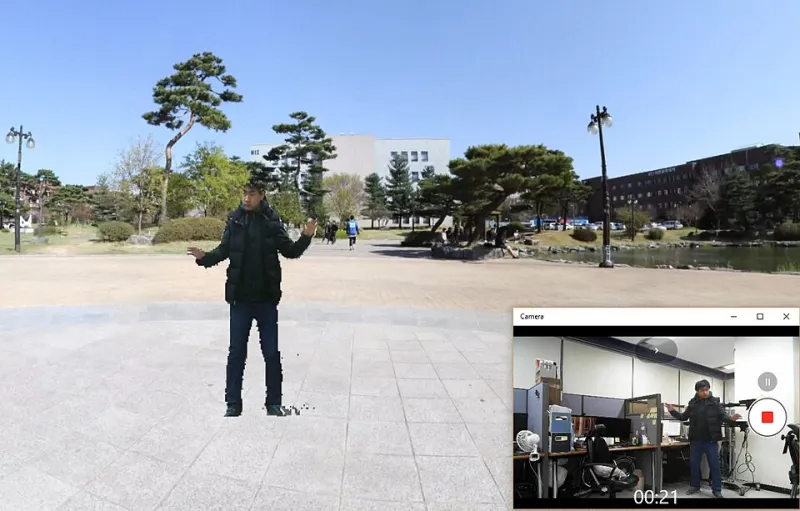
"The immersive quality matters," says Dr. Tran. "A 360-degree tour of Patagonia or a live-streamed safari engages the brain differently than just reading about a place. There's a presence effect that activates the same mental processes as genuine exploration."
For people dealing with depression in particular, that activation can be significant. Depression often narrows a person's world — both literally and psychologically. Virtual travel does the opposite. It expands the perceived horizon.
The Community Factor: More Than Just Sightseeing
Here's where things get genuinely interesting. The mental health benefits of virtual travel don't seem to come primarily from the destinations themselves — they come from the communities that form around them.
Platforms that incorporate group tours, shared itineraries, forums, and live-guided experiences are generating something that isolated Americans are deeply hungry for: low-pressure, interest-based social connection.
Unlike social media, which can feel performative and anxiety-inducing, virtual travel communities tend to be organized around a shared activity. You're not there to curate an image of yourself — you're there because you both want to see the temples of Angkor Wat or figure out what's actually worth visiting in the Scottish Highlands. The shared focus removes a lot of the social friction.
"It's closer to what a book club does, psychologically," explains Dr. Tran. "The activity gives people permission to connect without the awkwardness of pure socializing. And for people who are isolated, that permission is huge."
For users with social anxiety — another group that skews heavily toward isolation — the virtual format offers an additional layer of comfort. You can participate from your living room, at your own pace, without the sensory overwhelm of crowded real-world spaces.
Who's Benefiting Most
The populations showing the most pronounced benefits tend to fall into a few overlapping groups.
Older adults in rural areas are perhaps the most significant. Geographic isolation combined with reduced mobility and shrinking social circles creates a particularly difficult loneliness loop. Virtual travel communities offer both stimulation and connection without requiring anyone to drive an hour each way.
People with chronic illness or disability represent another major group. For individuals managing conditions like MS, fibromyalgia, or severe anxiety disorders, the world can feel genuinely inaccessible. Virtual travel doesn't just simulate experience — for many of these users, it provides experiences they simply couldn't have otherwise.
Caregivers are a less obvious but equally important beneficiary. Americans providing full-time care for a family member often become as homebound as the person they're caring for. Virtual travel communities give them a mental escape valve and a sense of personal identity beyond their caregiving role.
What This Means for How We Think About Virtual Travel
At A Virtual Journey, we spend a lot of time thinking about what virtual travel is for. The obvious answer is exploration — seeing places you can't easily get to, planning future trips, satisfying curiosity. And all of that is real.
But Carol in Montana, and the veteran in Nashville, and the thousands of Americans quietly logging on every Tuesday to explore somewhere new with people who've become genuine friends — they're pointing toward something bigger.
Virtual travel, at its best, isn't a consolation prize for people who can't afford a plane ticket or can't manage an airport. It's a legitimate mode of engagement with the world, one that carries real psychological weight and real social value.
The loneliness epidemic isn't going to be solved by any single thing. But the idea that exploring a faraway place together — even through a screen, even from a couch in rural Montana — can make someone feel less alone in the world? That's not a small thing.
That's actually kind of everything.
If you or someone you know is experiencing chronic loneliness or isolation, the 988 Suicide and Crisis Lifeline (call or text 988) offers free, confidential support. The AARP also maintains resources specifically for older adults experiencing social isolation at aarp.org.