Your Brain on Virtual Travel: What Neuroscience Actually Tells Us About Digital Exploration
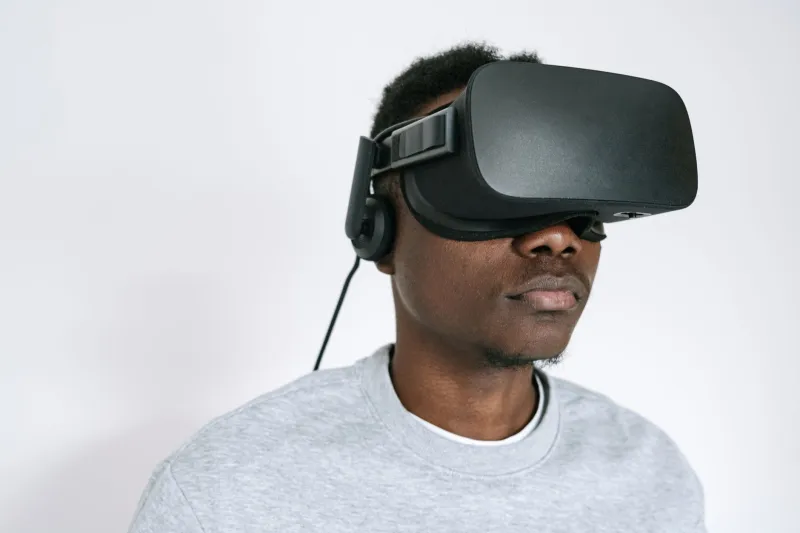
Let's get one thing out of the way upfront: nobody here is going to tell you that strapping on a VR headset is the same as standing barefoot on a beach in Maui. That would be a flat-out lie, and you'd know it the second the salt breeze failed to hit your face.
But here's the thing — the conversation about virtual travel versus physical travel is way more interesting than a simple "real wins, fake loses" debate. When researchers actually look at what's happening inside our skulls during both experiences, the picture gets surprisingly complicated. And for the millions of Americans who've turned to digital exploration out of curiosity, budget constraints, mobility challenges, or just plain wanderlust between vacations, that nuance really matters.
So what does science actually say?
The Brain Doesn't Always Know the Difference — At First
Here's a genuinely wild starting point: your brain is kind of gullible. Neuroscientists have long studied a phenomenon called "presence" — the sense of actually being somewhere — and it turns out immersive environments, even digital ones, can trigger it pretty convincingly.
Research coming out of institutions like the Virtual Human Interaction Lab at Stanford has shown that when people engage with high-quality immersive VR environments, their brains activate many of the same regions associated with real-world spatial navigation. The hippocampus — that seahorse-shaped structure critical to memory formation and navigation — lights up during virtual exploration in ways that overlap meaningfully with physical exploration.
Dr. Giuseppe Riva, a psychologist who has spent decades studying presence and immersive media, has described VR as capable of creating what he calls "embodied simulations" — experiences the brain partially processes as genuine memories rather than purely observed content. That's not nothing. That's actually kind of remarkable.
But — and this is a significant but — "partially" is doing a lot of heavy lifting in that sentence.
Where the Gap Opens Up: The Body Knows What the Brain Doesn't
Physical travel is a full-body event in a way that digital travel simply isn't, at least not yet. When you fly into New Orleans and step outside the airport, you're not just seeing and hearing the city. You're feeling the thick August humidity wrap around you like a warm, damp towel. You're smelling the faint mix of jasmine and something fried. Your legs are tired. Your inner ear adjusted to the flight. Your gut is already curious about beignets.
This multisensory cocktail isn't just pleasant — it's neurologically significant. Travel psychologist Dr. Michael Brein, who has interviewed thousands of travelers about transformative travel experiences, has noted that the most memorable and identity-shifting travel moments almost always involve some degree of physical discomfort, surprise, or sensory overload. The body being in a place creates a kind of memory encoding that purely visual or auditory experiences struggle to replicate.
The technical term researchers use is "embodied cognition" — the idea that thinking and feeling are deeply tied to what your physical body is experiencing at any given moment. A screen, no matter how vivid, can't fully replicate that loop.
What Virtual Travel Does Genuinely Well
Okay, so physical travel wins on sensory depth. But dismissing virtual exploration as a pale imitation misses some genuinely important things it does for the brain.
Curiosity and pre-travel priming. Studies on travel planning behavior suggest that virtual exploration of a destination significantly increases motivation to visit it physically. Your brain builds a mental map — a kind of anticipatory excitement — that actually makes the eventual real trip richer. Virtual travel isn't replacing the experience; it's writing the introduction.
Stress reduction and restoration. Research published in the journal Environment and Behavior found that even two-dimensional nature scenes — think a 4K video of a Norwegian fjord — can measurably lower cortisol levels and heart rate. For Americans dealing with chronic stress, a virtual journey to somewhere beautiful isn't a consolation prize. It's a legitimate psychological tool.
Accessibility and cognitive engagement for older adults. Some of the most compelling research involves older adults and people with limited mobility. Studies from the University of New England found that VR travel experiences among elderly participants in care facilities reduced feelings of isolation and depression, while also stimulating cognitive engagement in ways comparable to reminiscence therapy. For this population, virtual travel isn't second-best. It might be the best available option.
Empathy and perspective-shifting. Stanford's Virtual Human Interaction Lab has published research suggesting that immersive VR experiences set in other cultures or challenging environments can measurably increase empathy and pro-social behavior. Watching a documentary about climate change in the Amazon is one thing. Virtually standing inside a shrinking glacier is, neurologically speaking, something else.
The Memory Question
One of the more fascinating open questions in this field is how virtual travel memories age compared to physical ones. Anecdotally, most people would tell you their memories of a real trip to Rome outlast their memories of a virtual tour. But the research is less settled than you'd think.
Memory consolidation depends heavily on emotional arousal and novelty — and virtual experiences can deliver both. People who have strong emotional responses during immersive virtual experiences do form durable memories. The difference seems to be in the density of the memory: a real trip creates hundreds of overlapping sensory and emotional data points, while a virtual experience might create a vivid but somewhat thinner record.
Think of it like the difference between a richly annotated journal entry and a single great photograph. Both capture something real. One just captures more layers of it.
So, Can Virtual Travel Replace Physical Travel?
Honestly? No. And it probably shouldn't try to.
The most useful way to think about virtual exploration — and the framing that the science seems to support — is as a genuinely distinct experience category rather than a lesser version of physical travel. It does different things to your brain, and some of those things are legitimately valuable: reducing stress, building curiosity, expanding empathy, providing access where physical travel isn't possible.
What it doesn't do is give you the full-body, multisensory, identity-reshaping jolt that comes from truly being somewhere. The disorientation of arriving somewhere new, the unexpected conversation with a stranger, the way jet lag makes everything feel slightly dreamlike — those are experiences your nervous system processes in ways no current technology can fully replicate.
But here's the reframe worth sitting with: virtual travel isn't competing with physical travel any more than reading a great novel competes with living a life. Both matter. Both do something real to you. The question isn't which one wins — it's knowing what each one is actually for.
And from where we sit at A Virtual Journey, that's a pretty exciting place to be exploring.