Dust, Silence, and Digital Maps: Inside the Virtual Revival of America's Forgotten Ghost Towns
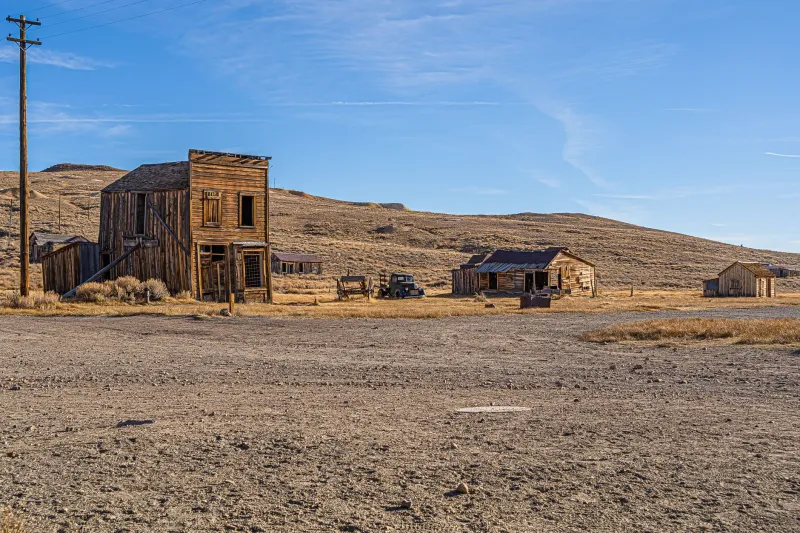
There's something quietly haunting about a place that used to be alive. A main street with storefronts still standing. A schoolhouse with desks still inside. A church with a bell that nobody rings anymore. Across the American West — and scattered through Appalachia, the Plains, and the deep South — thousands of communities like this exist in various states of collapse, slowly returning to the earth they were built on.
Most of us will never visit them. They're remote, fragile, sometimes legally off-limits, and often genuinely dangerous to walk through. But thanks to a growing movement of digital preservationists, 3D mappers, and virtual archaeologists, you don't have to make the drive. You can explore them from your screen — and in some ways, you'll see more than you ever could in person.
Why Ghost Towns Are Having a Digital Moment
America has somewhere between 3,000 and 6,000 ghost towns, depending on how loosely you define the term. Some are famous — Bodie, California, gets tens of thousands of physical visitors each year and is one of the best-preserved ghost towns in the country. Others are so obscure they don't appear on modern maps at all.
For years, the challenge with these places wasn't awareness. It was access. Many sit on private land. Others are protected historic sites where foot traffic is strictly controlled. And even the ones that are technically open to visitors are deteriorating fast — wood rots, roofs cave in, flash floods reshape entire streets in a single afternoon.
That urgency is exactly what's driving the digitization push. Preservationists and tech-minded historians have started treating these sites the same way conservators treat a fragile manuscript: document everything before it's gone.
"We're essentially in a race," says one virtual archaeologist who has spent the last five years scanning abandoned mining communities throughout Nevada and Colorado. "Some of these structures won't be standing in ten years. If we don't capture them now, all we'll have left is a photograph and a paragraph in a county history book."
What a Digital Ghost Town Actually Looks Like
The technology behind these virtual experiences has gotten remarkably sophisticated. LiDAR scanning — the same tech used in self-driving cars — can capture the precise geometry of a crumbling building down to the millimeter. Photogrammetry software stitches thousands of overlapping photographs into seamless 3D models. Drone footage fills in the gaps, offering aerial views that ground-level exploration could never provide.
The result, in the best cases, is something that feels genuinely immersive. Take the digital reconstruction of Rhyolite, Nevada — a boomtown that briefly swelled to 10,000 residents during a gold rush in the early 1900s before being completely abandoned by 1920. Through virtual tours available online, you can move through the ruins of the three-story bank building, peer into the old train depot, and get a real sense of the town's layout in a way that a still photograph simply can't convey.
Some experiences go even further. A handful of projects have layered historical photographs and archival records directly onto the 3D models, so you can toggle between what a building looks like today — cracked walls, collapsed ceiling, weeds pushing through the floorboards — and what it looked like in 1895, full of people and noise and commerce. It's a genuinely strange and moving thing to witness.
The Human Stories Hiding in the Rubble
Here's what separates a great virtual ghost town experience from a simple 3D scan: context. The buildings are interesting, sure. But what makes these places genuinely compelling is the human history embedded in them.
Who built this town, and why? Who left, and why did they leave? What happened to the people who stayed behind when everyone else moved on?
The best digital preservation projects are starting to treat these questions as seriously as the scanning itself. Curators are pairing virtual walkthroughs with oral histories, census records, newspaper archives, and personal letters — building a layered portrait of a community rather than just a 3D snapshot of its bones.
One project focused on the coal mining communities of southern West Virginia, many of which were company towns — built, owned, and eventually abandoned by a single corporation — has taken this approach particularly seriously. Virtual visitors can explore the physical remains of the town while also accessing digitized company ledgers, worker testimonials, and photographs that tell the story of what daily life actually looked like for the families who lived there. It's history you can walk around inside.
Places You Can Explore Right Now
If you're ready to start wandering, here are a few places worth putting on your virtual itinerary:
Bodie State Historic Park (California) has an excellent virtual tour component that lets you explore the park's 100-plus preserved structures without setting foot in the Eastern Sierra. The California State Parks system has invested in making this accessible, and it shows.
Bannack State Park (Montana) — one of the most intact ghost towns in the American West — has been partially digitized, and ongoing preservation projects continue to expand what's available online.
Centralia, Pennsylvania, the town famously abandoned after an underground coal mine fire that has been burning since 1962, has been documented extensively through drone footage and virtual walkthroughs. It's one of the more surreal virtual experiences you'll find: a modern American town, largely intact but completely empty, with steam still rising from cracks in the road.
For a broader collection, the Library of Congress's digital archives and various state historical societies have been quietly building robust online resources for years — many of which include photographs, maps, and documents that let you reconstruct the look and feel of a vanished community in remarkable detail.
Why This Kind of Exploration Hits Different
There's a reason ghost towns hold such a grip on the American imagination. They're the physical evidence of ambition — of people who showed up somewhere, built something, and then had to walk away. Mining busts, agricultural failures, railroad reroutes, corporate decisions made in distant boardrooms: the reasons for abandonment are as varied as American history itself.
Exploring these places virtually carries a particular kind of emotional weight. You're not just sightseeing. You're bearing witness to something that almost nobody else is paying attention to. And in a weird way, doing it from your screen — slowly panning through a 3D model of a collapsed general store, reading the name of a family above a doorway that nobody has walked through in eighty years — makes the silence feel even louder.
That's not a limitation of virtual travel. That's one of its genuine strengths.
So pull up a map, find a ghost town you've never heard of, and start exploring. The past isn't going anywhere — but some of it is disappearing faster than we'd like to admit.