Stepping Into the Uncomfortable: How VR Is Changing the Way Americans Experience Their Own History
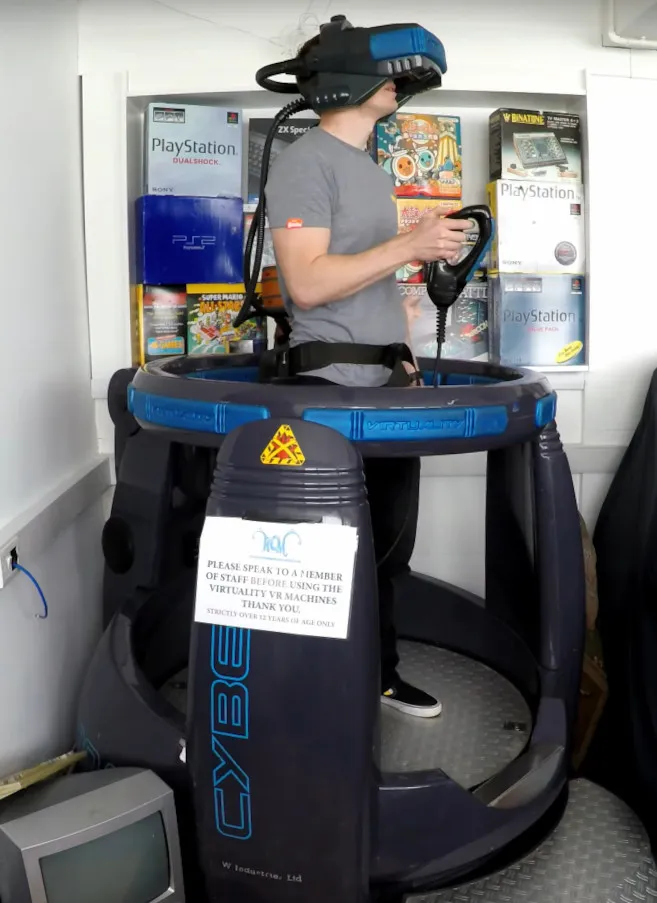
Photo: ctrl-alt-rees YouTube Channel (used with permission), CC BY-SA 4.0, via Wikimedia Commons
There's a particular kind of discomfort that comes with truly reckoning with history — not just reading about it, but feeling it. For most of us, American history arrived in the form of dog-eared textbooks, grainy documentary footage, and the occasional field trip to a museum where the air smelled faintly of old carpet. It was informative, sure. But it rarely made your chest tighten.
Virtual reality is changing that equation in ways nobody really saw coming.
Across the country, museums, universities, and independent developers are building immersive digital experiences that drop you — headset optional, browser often sufficient — directly into some of the most pivotal and painful chapters of the American story. And the people using these platforms aren't just students. They're curious adults, history buffs, and everyday Americans who want to understand their country better without having to book a flight to Montgomery or stand in line at the Smithsonian.
Why Traditional History Education Left Gaps
Let's be honest: the way American history has been taught in schools has always been uneven. What gets emphasized, what gets glossed over, and what gets left out entirely has long depended on geography, school district funding, and shifting political winds. The result is a country full of adults who have wildly different foundational understandings of events like Reconstruction, the internment of Japanese Americans, or the labor movements that shaped the modern workweek.
Digital platforms are quietly filling in some of those gaps — and doing it in a way that's far harder to dismiss than a paragraph in a chapter you skimmed the night before a test.
Standing on the Edmund Pettus Bridge
One of the most talked-about VR history experiences in recent years places users on the Edmund Pettus Bridge in Selma, Alabama — the site of Bloody Sunday in 1965, when voting rights marchers were met with violent resistance from state troopers. The experience, developed in partnership with civil rights organizations and educators, doesn't just show you what happened. It reconstructs the sounds, the crowd, the atmosphere of that March afternoon.
Users who've gone through it describe something that's hard to replicate with static media: a visceral understanding of what it meant to choose to keep walking. That kind of embodied empathy is what historians and educators have been chasing for decades.
The Smithsonian's National Museum of African American History and Culture has also expanded its digital footprint significantly, offering virtual walkthroughs of its galleries that let remote visitors engage with exhibits on slavery, the Great Migration, and the civil rights era. For Americans who live far from Washington, D.C. — or who face mobility limitations — this kind of access isn't a consolation prize. It's often the only realistic option.
Labor, Land, and the Stories That Got Quieter
Civil rights history gets a lot of the spotlight in immersive digital experiences, and rightfully so. But some of the most compelling virtual history projects are shining light on chapters that rarely made it into mainstream curricula at all.
The story of the American labor movement — the Triangle Shirtwaist Factory fire, the Pullman Strike, the coal mining communities of Appalachia — is being revisited through interactive digital exhibits that let users explore reconstructed environments and hear firsthand accounts brought to life through voice acting and archival audio. Platforms like the Lower East Side Tenement Museum's virtual experience put you inside a cramped New York apartment at the turn of the 20th century, making the realities of immigrant labor and urban poverty tangible in a way that statistics simply can't.
There are also growing projects around Indigenous American history — experiences built in direct collaboration with tribal nations that offer perspectives on land treaties, forced relocation, and cultural preservation that have been systematically underrepresented in mainstream American education. These aren't just digital tours. They're acts of historical correction.
The Empathy Argument
Researchers studying immersive media have consistently found that VR and interactive digital environments generate stronger empathetic responses than passive content. When you're in a space — even a reconstructed, digital one — your brain processes it differently than when you're reading about it or watching a documentary on a flat screen.
For American history specifically, this matters enormously. The events that shaped this country aren't abstract. They happened to real people, in real places, and their consequences are still unfolding. Experiences that put users in closer psychological proximity to those moments have the potential to shift how people understand not just the past, but the present.
That's not a small thing.
How to Start Your Own Virtual History Journey
You don't need a VR headset to access most of these experiences — a laptop and a decent internet connection will get you surprisingly far. Here are a few places worth starting:
- The National Museum of African American History and Culture (nmaahc.si.edu) offers virtual tours of its permanent collection, including deeply researched exhibits on slavery and the civil rights movement.
- The Tenement Museum (tenement.org) has developed digital tours and interactive content around immigrant life in New York from the 1860s onward.
- Oculus/Meta's history experiences include several civil rights and World War II-era immersive projects available through the Quest platform.
- Google Arts & Culture partners with hundreds of American historical sites to offer street-level and gallery-style virtual access, from Gettysburg to the Japanese American National Museum in Los Angeles.
- The National Park Service has been steadily expanding its virtual tour offerings, including immersive content for sites like Manzanar National Historic Site and the Selma to Montgomery National Historic Trail.
History Doesn't Have to Feel Distant
One of the most interesting things about this new wave of virtual history experiences is how they're reframing who gets to be a serious student of American history. You don't have to be enrolled in a course. You don't have to live near a major museum. You don't have to be able to travel.
You just have to be curious enough to look.
The American story is complicated, contradictory, and still very much in progress. The best of these digital experiences don't shy away from that complexity — they lean into it, trusting that people can handle the full picture when it's presented with care and context.
So pull up a chair. There's a lot of history to explore, and for once, it's coming to you.