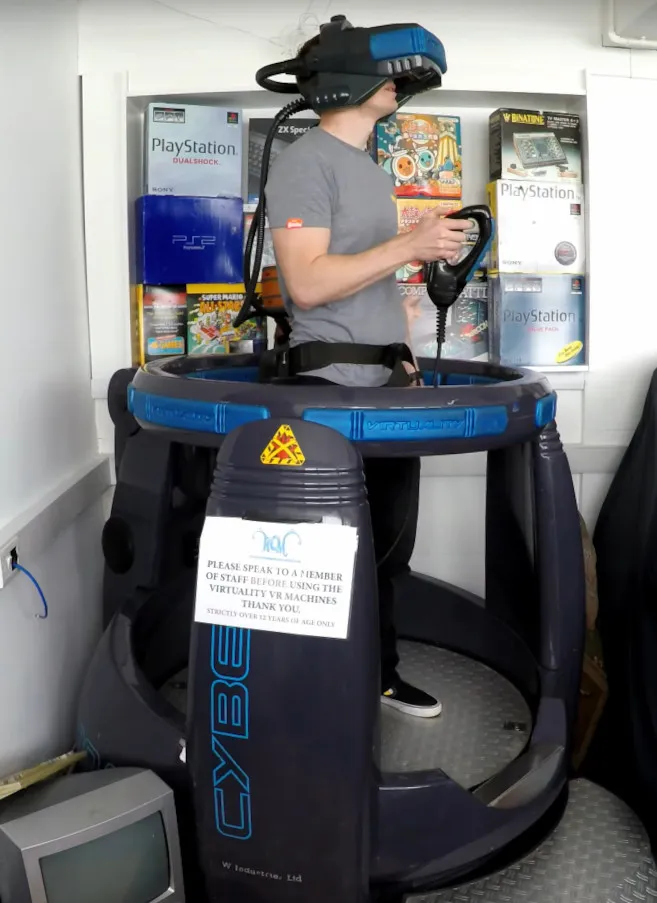
Try Before You Fly: How Virtual Tours Are Quietly Revolutionizing the Way Americans Plan Vacations

Photo: Judgefloro, CC0, via Wikimedia Commons
There's a particular kind of buyer's remorse that only travelers know. You've spent months saving, you've finally booked the flight, and somewhere over the Atlantic you start wondering — is this actually going to be worth it? For millions of Americans, that nagging uncertainty used to be unavoidable. Now, increasingly, it isn't.
Virtual tourism has quietly graduated from novelty to genuine travel tool. What started as a pandemic-era workaround has evolved into something more interesting: a way for people to actually test drive a destination before spending thousands of dollars and precious vacation days on it. And the implications for how Americans plan their trips are bigger than most people realize.
The Rise of the Digital Pre-Trip
Think about how you typically research a vacation. Maybe you scroll through Instagram, watch a few YouTube vlogs, read some TripAdvisor reviews. It's fine. But it's also a little like trying to decide if you like a restaurant by looking at photos of the menu.
Virtual tours offer something fundamentally different — a sense of actual presence. Whether it's a high-definition 360° walkthrough of Kyoto's Arashiyama bamboo groves or a fully immersive VR experience of the Peruvian Sacred Valley, these tools put you in the environment rather than just showing it to you. That's a meaningful shift.
Travel agencies and booking platforms have started paying attention. Companies like Expedia and Google Travel have integrated immersive preview tools into their planning features, and independent platforms are building entire ecosystems around the idea of exploring a place digitally before committing to it physically. The logic is straightforward: the more confidently someone can visualize themselves somewhere, the more likely they are to actually go.
Overcoming the Anxiety of the Unknown
For a lot of Americans — particularly first-time international travelers — the biggest barrier to booking isn't money. It's uncertainty. What's it actually going to feel like to navigate a city where you don't speak the language? Is that hyped-up neighborhood in Lisbon going to feel walkable and welcoming, or overwhelming and disorienting?
Virtual tours can answer those questions in a low-stakes environment. You can wander a digital reconstruction of Marrakech's medina from your living room couch, get a feel for how chaotic or manageable it seems, and decide whether you want to lean into that energy or redirect your trip somewhere that fits your comfort level better.
This is particularly powerful for travelers with mobility considerations, social anxiety, or simply less experience with international travel. The ability to mentally rehearse a destination — to walk the streets, understand the scale, absorb the visual texture of a place — reduces the psychological friction that stops so many people from booking in the first place.
Testing Cultural Curiosity Before You Commit
Here's a scenario that plays out more than you'd think: someone gets excited about visiting Japan after watching a documentary. They book a two-week trip. They arrive and realize they're genuinely uncomfortable with the cultural expectations around silence, group behavior, and social formality. The trip is still good — but it's harder than expected, and they spend half of it wishing they'd spent more time in Southeast Asia instead.
Virtual tourism creates a space to honestly assess cultural fit before you're already there. Immersive tours of local markets, religious sites, and everyday neighborhoods give you a real sense of a culture's rhythm. You can decide whether that rhythm excites you or exhausts you. That's not a small thing.
Platforms like Google Arts & Culture and dedicated VR travel apps now offer experiences that go beyond scenic landmarks. Some include guided cultural context — explaining local customs, offering language snippets, walking you through social norms. It's closer to a cultural orientation than a simple tour, and it makes the eventual real-world trip richer and more intentional.
Smarter Trips, Not Cheaper Ones
It's worth being clear about what virtual tourism is and isn't doing here. It isn't replacing travel. If anything, the data suggests the opposite — people who engage deeply with a destination through virtual tools often end up more motivated to visit in person, not less. The digital experience sharpens the appetite rather than satisfying it.
What it does do is make the eventual trip smarter. Travelers who've done a virtual pre-visit tend to have more specific questions, better-targeted itineraries, and clearer expectations. They know which neighborhoods they want to stay in. They've already mentally mapped the walk from their hotel to the market. They arrive with context instead of confusion.
For a country where the average American worker takes fewer vacation days than almost any other developed nation, that efficiency matters. When you only get two weeks a year, you want those two weeks to count. Virtual exploration is increasingly how people make sure they do.
The Blurry Line Between Exploration and Planning
There's something genuinely new happening in the travel space, and it's worth naming directly: the line between exploring a destination and planning a trip to it is disappearing. They used to be separate activities — you'd research, then you'd go. Now, the research is a form of going.
Spending an evening wandering through a virtual tour of the Scottish Highlands isn't just homework. It's an experience in its own right. It builds a relationship with a place. And when you eventually stand on a real hillside outside Inverness with the wind coming off the water, that relationship doesn't start from scratch — it deepens.
That's the quiet revolution here. Virtual tourism isn't a consolation prize for people who can't travel. It's a new layer of how travel works — a first chapter that makes the rest of the story better.
At A Virtual Journey, that's exactly the kind of exploration we're here for. Whether you're scoping out your next big trip or just feeding a genuine curiosity about the world, the journey starts long before the airport.