From Living Room to Lab: How Digital Museum Archives Are Creating a New Generation of Armchair Archaeologists
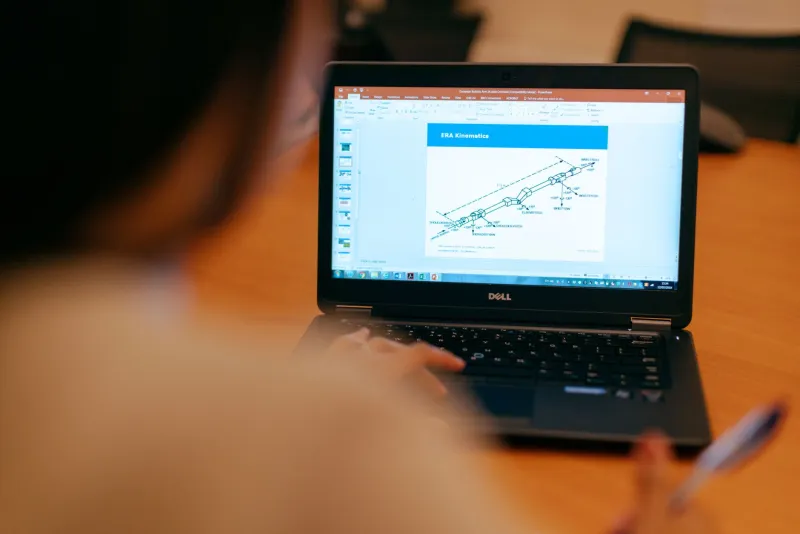
There's a guy in Tucson who spends his Sunday mornings the way some people spend them on the golf course — hunched over his laptop, cross-referencing pottery sherd measurements in the Smithsonian's online collections against obscure 1930s excavation reports he tracked down through the Internet Archive. He's not a professor. He's a retired HVAC technician named Dennis. And last year, he flagged a cataloging inconsistency that a museum curator later confirmed was a legitimate misattribution — a ceramic fragment that had been assigned the wrong cultural origin for decades.
Dennis isn't an outlier anymore. He's part of a quietly growing movement of citizen researchers who are using the internet's increasingly rich trove of digitized artifacts, 3D scans, and open-access scholarly databases to do work that used to require institutional credentials and a university parking pass.
Welcome to the age of the bedroom archaeologist.
The Digital Unlock Nobody Talked About
Museums have been digitizing their collections for years, but the scope of what's now publicly available has crossed a threshold that most people haven't noticed yet. The Smithsonian alone has put over 4.7 million records online, with a growing subset featuring interactive 3D models you can rotate, zoom, and examine in granular detail. The Metropolitan Museum of Art offers open-access downloads of more than 470,000 images from its collection. The Library of Congress has digitized millions of historical documents, photographs, and maps. And that's before you get into university-run portals, state historical society databases, and international repositories like the British Museum's online collection.
For someone with genuine curiosity and a decent internet connection, this is an almost absurd amount of raw material to work with.
What Citizen Researchers Are Actually Finding
The discoveries range from personally meaningful to academically significant. Some armchair researchers are using digitized census records, ship manifests, and local historical photographs to trace family connections to specific historical events — finding great-great-grandparents in Civil War pension files, or identifying a relative in a photograph from a Depression-era government project. That kind of personal archaeology is emotionally powerful in a way that no guided tour can replicate.
But some people are going further. Crowdsourced research platforms like Zooniverse have formalized the process, connecting volunteers with real scientific projects that need human eyes on large datasets. The platform has hosted archaeology-adjacent projects where participants help transcribe historical ship logs, identify features in aerial survey images of potential dig sites, or classify artifacts photographed during ongoing fieldwork. Researchers from institutions including NASA, Oxford, and the Field Museum in Chicago have used Zooniverse to process data at a scale that would be impossible with academic staff alone.
Participants don't just click buttons and disappear. Many develop genuine expertise over time. Some have been credited in published research. A few have moved from volunteer classifier to project collaborator.
The 3D Revolution Is a Bigger Deal Than It Sounds
If you haven't played around with a photogrammetry model of an ancient artifact lately, you're missing something genuinely remarkable. Institutions like the Smithsonian X 3D Explorer and Sketchfab's cultural heritage portal host detailed three-dimensional scans of objects ranging from Egyptian shabtis to Native American tools to medieval European armor. You can examine surface texture, tool marks, wear patterns, and construction details that even high-resolution photographs don't capture well.
For a certain kind of curious person, this is a rabbit hole with no visible bottom. Researchers — amateur and professional alike — have used comparative analysis of these models to identify manufacturing techniques, propose new cultural connections between distant regions, and challenge long-held assumptions about how certain objects were used. The physical barrier that once separated the public from museum collections — the glass case, the restricted storage room, the need for a formal research appointment — has been partially dissolved by digital access.
It's Not Just About Ancient History
The same dynamic is playing out in 20th-century historical research. Digitized newspaper archives through services like Newspapers.com and Chronicling America (a Library of Congress project) have made it possible for ordinary people to piece together local histories, track the careers of forgotten figures, and document events that never made it into official histories. Genealogy platforms like Ancestry and FamilySearch sit at the intersection of personal and public history, and serious users often find themselves contributing transcriptions, corrections, and source connections back into the shared database.
One researcher in rural Minnesota spent two years using digitized county land records, historical aerial photographs, and Indigenous language databases to document the locations of settlements that had been effectively erased from local historical memory. Her work was eventually picked up by a regional historical preservation organization and contributed to a formal site protection effort.
She started because she was curious about what used to stand on her family's farmland.
How to Actually Get Started
If this sounds appealing, the barrier to entry is genuinely low. A few places worth bookmarking:
Smithsonian Open Access (si.edu/openaccess) — millions of digitized collection items, free to use and explore.
Zooniverse (zooniverse.org) — the gold standard for structured citizen science participation, with active archaeology and history projects.
Chronicling America (chroniclingamerica.loc.gov) — a massive archive of historical American newspapers, fully searchable.
The Metropolitan Museum's Open Access Collection (metmuseum.org/art/collection) — art and artifact records with high-resolution images.
JSTOR's Free Access Program — limited but real access to academic journal articles, useful for cross-referencing what you find.
The learning curve varies depending on what you're investigating, but most platforms are designed with non-specialists in mind. And the broader research community — including many working academics — has become notably more welcoming of rigorous amateur contributions than it was even a decade ago.
The Bigger Picture
There's something genuinely exciting happening here that goes beyond any individual discovery. The democratization of museum collections and archival access is slowly changing who gets to participate in the construction of historical knowledge. For most of human history, that work was gatekept by geography, institutional affiliation, and financial resources. A virtual journey through a digitized museum collection doesn't replace fieldwork or formal scholarship — but it creates an on-ramp that didn't exist before.
Dennis in Tucson isn't replacing archaeologists. He's extending what they can do. And somewhere right now, there's probably a retired teacher in Ohio, a college student in rural Georgia, and a curious retiree in suburban Seattle doing the same thing — each one following a thread that might lead nowhere, or might lead somewhere genuinely interesting.
The dig site is open. The tools are free. All you need is the curiosity to start.