Your Library Card Just Became a Boarding Pass: Inside America's Free VR Travel Revolution

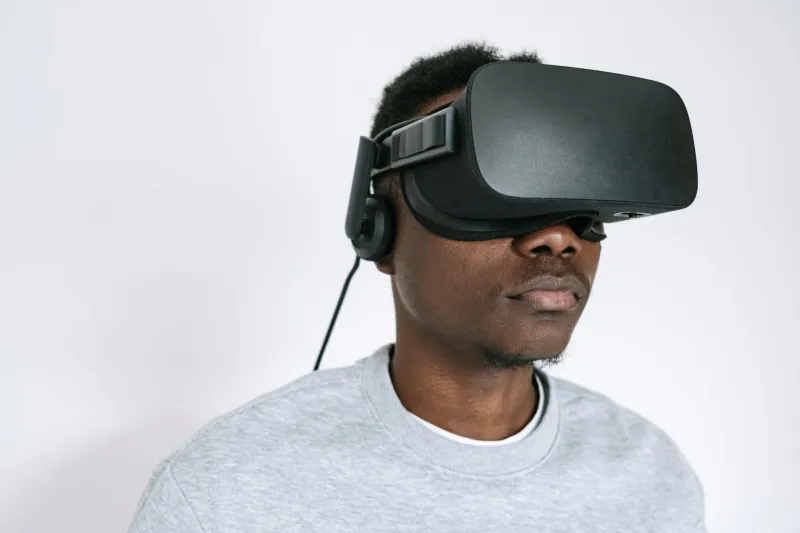
Photo: person wearing VR headset in public library, via thumbs.dreamstime.com
Somewhere between the DVD lending and the 3D printers, America's public libraries picked up a new job: travel agent. Not the kind that books your flight to Denver, but the kind that drops you into the Sistine Chapel, the Great Barrier Reef, or a Tokyo street market on a Tuesday afternoon — all without charging you a dime.
If you haven't set foot in your local branch lately, you might be surprised at what's sitting behind the circulation desk.
The Headset in the Stacks
Across the country, libraries have started adding virtual reality equipment to their lending catalogs the same way they once added laptops and hotspots. Systems in Ohio, Texas, and California have run pilot programs lending out standalone VR headsets — think Meta Quest–style devices — for weeklong checkouts, complete with preloaded travel apps and laminated instruction cards for first-timers.
The logic is simple and a little beautiful: a headset costs a few hundred dollars, which puts it out of reach for plenty of households. A library can buy five of them and let the whole town share.
Some branches go further, hosting scheduled "travel nights" where patrons take turns walking through Machu Picchu or the International Space Station in a community room, guided by a librarian who's become, through sheer enthusiasm, the closest thing your ZIP code has to a tour operator.
Meet the New Travel Desk
Ask around and you'll find librarians who have essentially built full travel-planning services out of their reference desks. We've talked to staff who curate "virtual itineraries" for patrons — a folder of free online tours, museum walkthroughs, and 360-degree video playlists tailored to whatever corner of the world someone's curious about.
One pattern comes up again and again: the patrons who use these services most aren't tech enthusiasts. They're people who can't fly. Folks on fixed incomes, people managing chronic illness, caregivers who can't get away for a weekend, new parents. For them, the library isn't a novelty — it's the only departure gate in town.
And unlike an airline, the library doesn't check your budget at the door.
Free Access You're Probably Not Using
Here's the part most cardholders miss: many library systems subscribe to premium platforms — language apps, streaming documentary services, digital archives — that include rich travel content. Your card number, not your wallet, is the key.
A few things worth checking your library's website for:
- Documentary and streaming subscriptions with destination-heavy catalogs
- Language learning platforms, which pair surprisingly well with a virtual stroll through a foreign city
- Digital collections of historic maps, photographs, and travel writing from a century ago
- VR equipment lending, if your system runs one (call and ask — many libraries bought headsets and can't always get the word out)
If your branch doesn't offer any of this, it never hurts to request it. Library purchasing is genuinely responsive to patron demand, and "we'd use a VR headset" is an easy ask for a board to say yes to.
Why This Matters More Than It Sounds
There's a temptation to treat library VR programs as a gimmick — a shiny way to get teenagers through the door. But the deeper story is about access. Domestic airfare isn't cheap. International travel is out of reach for a huge share of Americans, and that gap has always existed; libraries are just the first institutions to do something systemic about it.
A kid in rural Kansas can stand inside the Louvre. A retiree in Detroit can watch the sunrise over Angkor Wat. Neither needs a passport, a credit card, or a connecting flight through Atlanta.
That's not a replacement for real travel, and no one at the library will tell you it is. But as a gateway — a way to explore, dream, and plan — it's hard to beat the price.
How to Start This Week
- Log into your library's website and browse the digital resources page. Half the travel content there goes unused.
- Call or visit and ask directly: "Do you lend VR equipment or host virtual travel programs?" If the answer's no, ask what would need to happen to change it.
- If your system does lend headsets, book one like you would a museum pass — popular weeks go fast.
- Bring a skeptical relative. Watching someone's first VR trip to Venice is half the fun.
The most underused travel resource in America isn't a hidden app or a flash sale. It's a building with free parking, a helpful staff, and — increasingly — a portal to the whole planet. You already have the key. It's in your wallet.